
BIRDS OF THE SAME FEATHER
LESEAT MORE by Lesley Tan Rice
Chicken eaten with rice is a popular dish all over Asia, with different countries boasting its own breed. Leslie Tan Rice, our resident foodie, renumerates on the different nuances. From the
humble chicken tinola using manok Bisaya to
Singapore’s popular chicken rice.
IN SPITE OF THE CURRENT state of world affairs, I still believe there are more things that unite us than divide us; and eating together is among the greatest of all activities that can bond. Even in my growing years, eating has always been an enjoyable experience – not by how it filled an empty stomach, but more by how partaking of a meal could make me recognize and appreciate the cultural differences and interesting morsels of history that came with every bite I took. This column is an ode to eating, discovering new gastronomic finds, as well as ruminating past dining adventures through a single ingredient which ties together these varied experiences.
If there’s one protein I could eat everyday without boredom, it would be chicken. It can be baked, boiled, steamed, poached, grilled, roasted, stewed or fried, and combined with assorted ingredients. Plus, almost every part of it is edible, so nothing is wasted. My personal preference is the native chicken, what we call manok Bisaya in
Cebu. Whenever she picked me up from the airport, my mother would bring me to Conching’s at North Reclamation for a pit stop. We’d order a whole chicken each with a bowl of chicken tinola, rice, talong, guso or lato on the side, and a
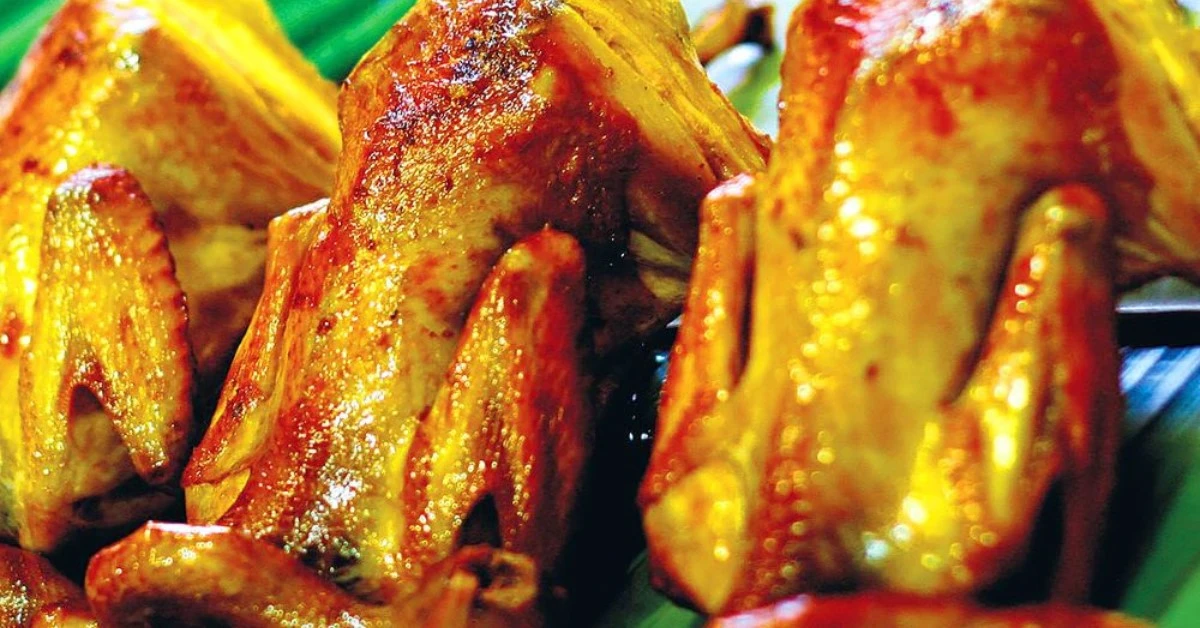
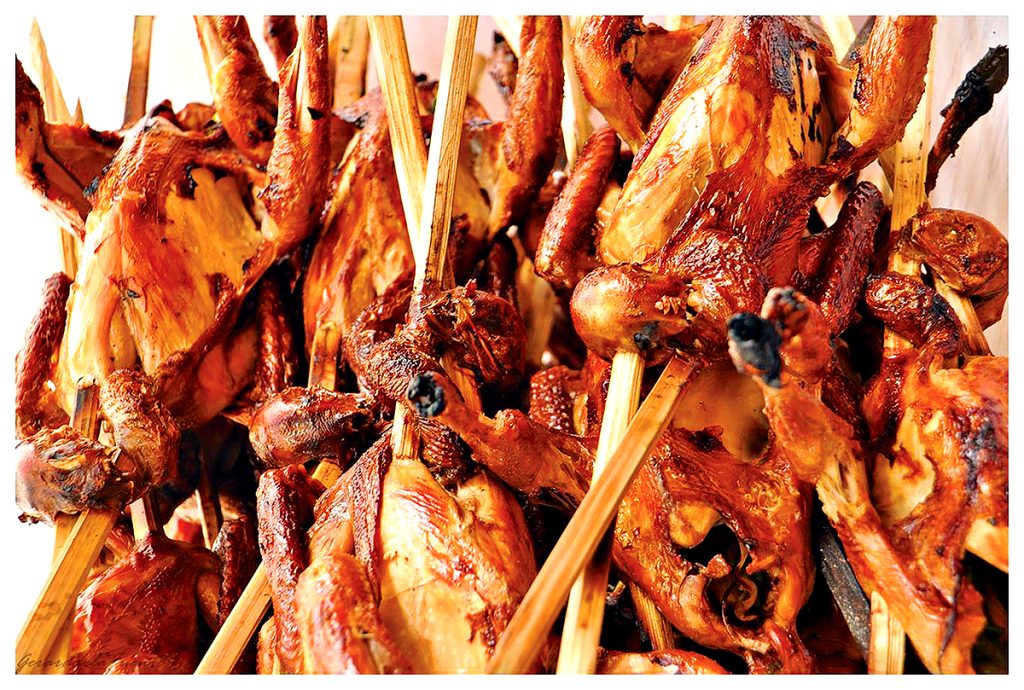
bottle of soda. The chicken itself hardly looks appealing. Tiny, shriveled and usually a little burnt from the coals it was cooked on, it is noticeably unlike commercial roast or barbecued chicken that have most likely depended on modifiers and processes to plump them up. This may be up for debate, but I think manok Bisaya, along with Bacolod chicken, deserves a spot in the Philippines’ culinary tourism as being the original free-range produce, way before the terms free-range and organic along with farm to table and such came to populate our social media consciousness.
At Conching’s, the poultry is charcoal-grilled slow and steady, and when you bite into it, the taste is like no other. You instantly catch a whiff of tanglad (lemongrass) and aromatics, while the naturally sweet flavor of the meat comes through, enhanced with a mildly tangy and smoky taste. It’s also comforting and quite nostalgic to see how the restaurant remains laidback and unpretentious through the decades.
Another equally appetizing option is the lechon manok at Maco. My first taste of this barbecued favorite was at its original Banilad branch. I still
remember the taste of smoky, crispy skin covering a firm and incredibly delicious fowl. Two more branches have opened as the restaurant expanded to Busay and Consolacion. I have not been to either, but that gives me two more places in Cebu to try when I go back.
While similar in how they’re raised, native chicken in Cebu and Singapore differ in culinary preparation. In Singapore, the equivalent to our manok Bisaya would be kampong or kampung chicken – kampung being the Malay term for village. Just like our local poultry, kampung chickens are reared in a more natural environment, allowed to run free in house farms, making the fowl fitter and their meat firmer.
With not enough land for agriculture in Singapore, the island-country imports most of its food requirements, as is the case of kampung chicken which are bought from nearby Malaysia. Indonesia has recently been approved as a chicken supplier too, to help meet the – dare I say insatiable? – demand for chicken. As an informal saying goes: Chicken Rice is to Singapore what pizza is to New York. My preferred cooking method for kampung chicken is poached, Hainanese-style. Most restaurants and hawker stalls in Singapore also serve a roasted version along with soya sauce chicken rice – a poached chicken braised in soya sauce (a Cantonese influence) which gives it a darker appearance. Thrust onto the world stage
after visits by the late Anthony Bourdain and a cook-off with Gordon Ramsey, Tian Tian Chicken Rice at Maxwell continues to attract a sizeable queue from both locals and tourists everyday. The signature dish with its succulent and flavorful meat is served with fluffy, fragrant rice cooked in chicken stock. Tian Tian is not without controversy though – its head chef of more than 20 years left to open his own stall called Ah Tai at the same hawker center after a tiff with the owner’s daughter. So which one is better? It depends on who you ask. Some people prefer Tian Tian and its fluffy and umami rice which is given equal importance as the chicken meat; while others choose Ah Tai, which is more value for money and includes soup and more condiments. Personally, I can’t tell the difference – I may need to go back again and dissect each ingredient and condiment. However, if I were to choose based on condiments alone, I prefer Soup Restaurant’s Samsui chicken. The chicken is prepared the same way as the beloved chicken rice dish, the difference being in the one and only condiment: ginger sauce in sesame oil, instead of the usual garlic chili sauce. It’s called Samsui chicken as this was originally prepared by immigrant Chinese women from Samsui wh came to Singapore in the 1920s to 1940s to seek employment in the construction sector. Samsui women were also known as Hong Tou Jin, or red bandanas, the headdresses that identified them as they went about making a living. Boon Tong Kee is also highly recommended for its chicken rice and classic favorites served family-style. If you want air-conditioning and comfortable
seating, this is the place to go. Whether poached or grilled, dipped in vinegar or spice, calamansi
or chili, there is a native chicken dish to
satisfy any craving.